
Asian Horizon: Winelands Wineries Chart New Export Course
Franschhoek and Paarl wineries are strategically shifting export focus to Asian markets, adapting to the weak Rand and securing future growth.
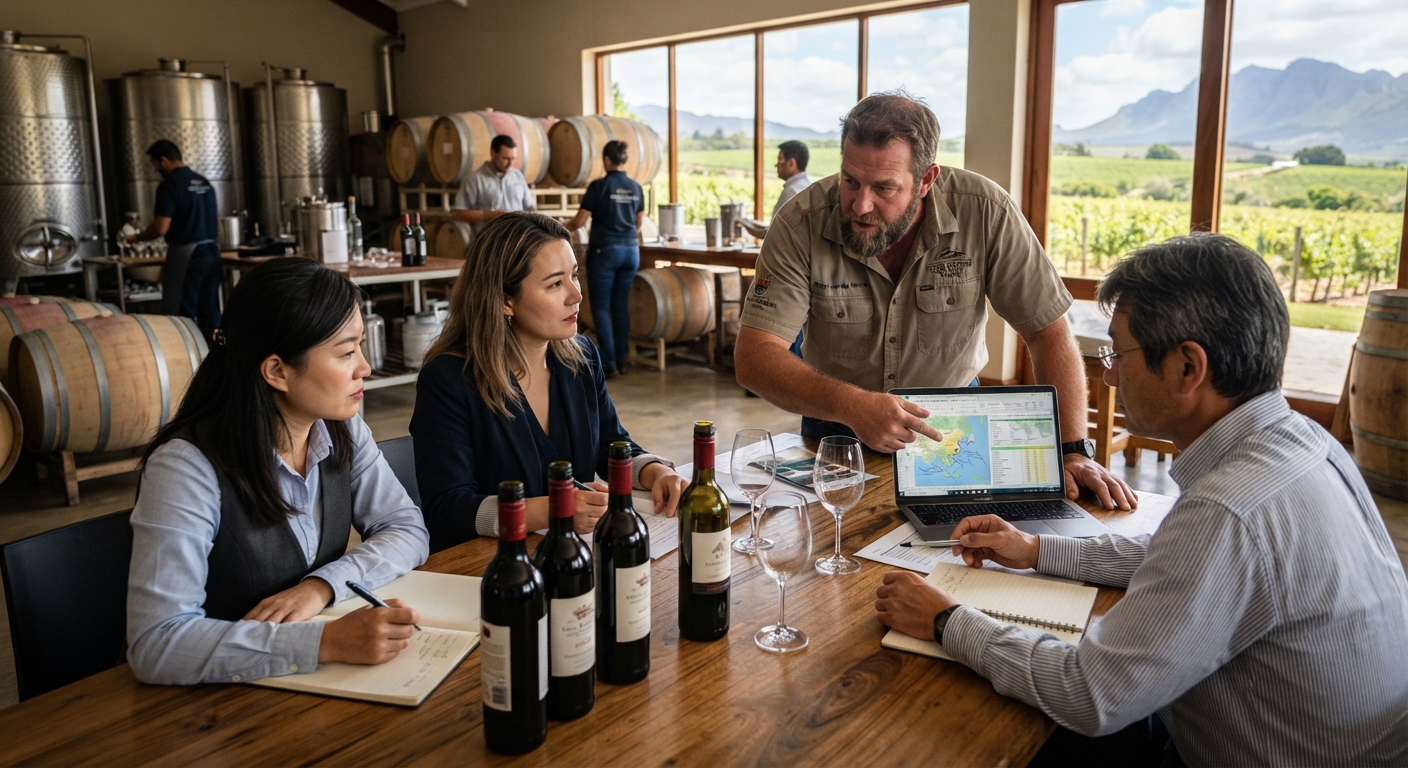
FRANSCHHOEK & PAARL – In a significant strategic pivot, esteemed wineries across the Franschhoek and Paarl valleys are increasingly setting their sights on burgeoning Asian markets, a shift largely driven by the persistent weakening of the South African Rand against major global currencies.
Traditionally strong in European and North American markets, many producers are now re-evaluating their export portfolios, finding new economic advantages and growth potential in countries like China, Japan, South Korea, and Singapore. This recalibration is not merely a short-term reaction but a calculated long-term investment in market diversification.
The Rand’s Double-Edged Export Sword
While a depreciating Rand typically makes South African exports more competitive on paper, the reality for winemakers is more complex. The cost of imported materials – from specialized equipment and bottling components to sophisticated marketing tools – escalates with every dip in the Rand’s value. Furthermore, established markets in Europe, grappling with their own economic slowdowns, are increasingly price-sensitive, squeezing already tight profit margins for premium Cape wines.
“The days of relying solely on traditional markets are fading,” explains Johan Marais, a veteran wine industry analyst based in Stellenbosch. “While the weak Rand can offer a pricing advantage, it’s often offset by rising input costs and consumer resistance in established regions. Asia, however, presents a different narrative—one of growing affluence and a genuine thirst for discovery.” This push-pull dynamic is forcing producers to seek out regions where premium pricing can be maintained, and even enhanced, offering a stronger return on investment despite the local currency’s volatility.
Uncorking Asia’s Potential
Asian markets are proving particularly attractive due to their rapidly expanding middle classes, increasing disposable incomes, and a sophisticated appreciation for high-quality, diverse wines. Countries like China, despite recent economic fluctuations, remain a colossal market for luxury goods, while Japan and South Korea offer discerning consumers a willingness to explore new world wines with compelling stories.
Local producers are investing in tailored marketing campaigns, adapting their packaging, and participating in specialized trade fairs to cater to unique Asian consumer preferences. From smaller, elegant bottles for urban apartment dwellers to culturally sensitive branding, Winelands wineries are demonstrating agility and foresight in this new frontier. The aim is not just to sell wine but to build lasting brand equity and cultivate a loyal following in a region poised for sustained economic growth.
The Local Angle
For Winelands residents, this export shift means greater economic stability for a crucial local industry, safeguarding jobs and fostering local enterprise. For students, it opens up exciting new career pathways in international trade, marketing, logistics, and even viticulture, with a focus on diverse cultural competencies. Wine-industry professionals will find new challenges and opportunities for innovation in product development, market strategy, and cross-cultural communication. Lastly, investors can anticipate potential growth in wineries strategically positioned in these high-value markets, making the Winelands an even more attractive prospect for capital infusion and long-term returns. This strategic pivot to Asia underscores the resilience and adaptability defining the future of our region’s renowned wine sector.
Source: Wine Brief